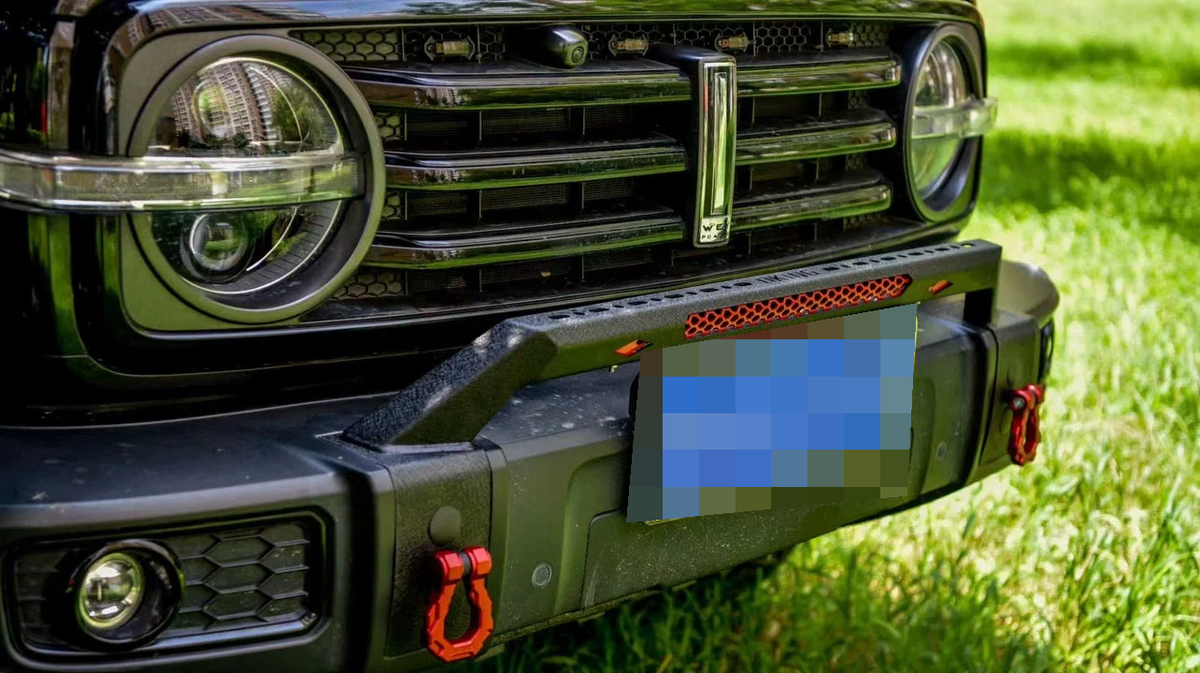
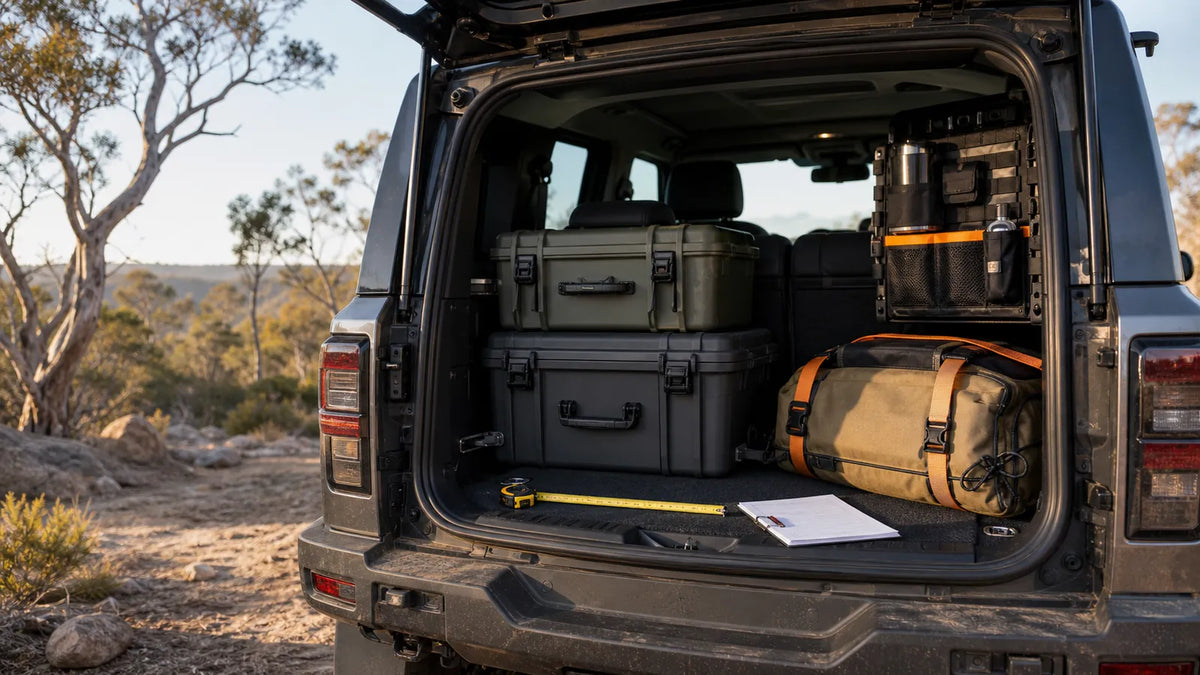
Good Tank 300 trunk storage should make equipment easier to reach without blocking the rear seats, emergency tools, visibility or safe load restraint. Before buying a cargo rack, box or tailgate table, record the exact vehicle, measure the usable space and decide what must remain accessible.
For most owners, the right system is not the largest one. It is the smallest combination that keeps frequently used items organised and heavier equipment low, secure and within the vehicle's load limits. If you are still planning the whole cabin and cargo area, begin with our GWM Tank 300 storage and cargo guide.
Quick answer: what should you check before buying Tank 300 trunk storage?
Confirm these seven points before ordering:
- Petrol or hybrid, model year, trim and existing accessories.
- Usable cargo dimensions with the rear seats in the positions you actually use.
- Access to emergency equipment, power outlets, vents, latches and the tailgate.
- Whether you need a small organiser, side-window rack, shelf or tailgate table.
- How every item will be restrained while driving.
- The combined mass of the rack, boxes, mounts and cargo.
- The exact product variant, package contents, mounting method and delivery details.
A product photo can show the general layout, but it does not prove that the pictured combination matches your vehicle or the variant selected at checkout.
1. Identify the exact Tank 300 and its current setup
Start with the vehicle rather than the storage product. Record:
- petrol or hybrid powertrain;
- model year and trim;
- left- or right-side accessories already installed;
- cargo mat, liner or drawer system;
- rear-seat covers or barriers;
- fridge, battery or power equipment; and
- any tailgate table, roof shelf or window-mounted equipment.
Current Decision Maker 4X4 storage listings may identify both Tank 300 petrol and hybrid applications, but existing modifications can still affect clearance and mounting. Clear photos of the cargo floor, both side windows, rear-seat backs and tailgate help identify conflicts before an order is placed.
2. Measure the space in the way you use it
Do not rely only on a seller's overall dimensions. Measure the usable area in your own vehicle with the rear seats upright, reclined and folded as required for your normal trips.
Record at least:
- floor length from the closed tailgate to the rear seats;
- width between the narrowest trim points;
- height below the window line and any proposed shelf;
- clearance needed for seat folding and seatbelt movement;
- tailgate opening width and the path used to load bulky items; and
- the space required to remove the spare-wheel tools or emergency kit.
Then measure the actual equipment you plan to carry. A storage rack can fit the vehicle while the fridge, recovery bag or camping box still fails to pass through the tailgate opening.
Use cardboard templates for side-window racks or shelves if the available space is difficult to visualise. Check the template from the driver's seat as well as from the tailgate.

This planning diagram separates cargo functions without claiming vehicle dimensions. Measure the actual Tank 300 and equipment before choosing a rack or box.
3. Protect access, visibility and vehicle functions
A practical Tank 300 cargo setup should not create a new problem every time the vehicle is used. Before choosing a mounting position, check that the proposed system does not interfere with:
- rear-seat latches and folding movement;
- seatbelts or airbag-related trim;
- jack, tools and emergency equipment;
- cargo-area power outlets and wiring;
- vents and trim fasteners;
- tailgate latch and weather seal;
- rearward visibility; or
- access needed to inspect or service the vehicle.
Side-window racks use otherwise empty space, but anything attached to them can reduce the driver's view or become a projectile if it is not secured. A tailgate table is convenient at camp, but it must close securely and clear the latch, trim and other rear-door accessories.
4. Match the storage type to the job
Tank 300 trunk storage products solve different problems. Compare the function and package scope before comparing price.
| Storage type | Useful for | Confirm before ordering |
|---|---|---|
| Compact trunk storage box | Small loose items that otherwise move around the cargo floor | Cargo mat or liner clearance, position and a method to prevent sliding |
| Under-seat storage box | Light, infrequently used items kept away from the main cargo area | One- or two-piece variant, seat-rail movement, wiring, vents and footwell space |
| Modular side-window storage rack | Pouches, tools and light equipment mounted above the cargo floor | Left/right frame, cross-frame or full-set contents; trim, seatbelt and visibility clearance |
| Upgraded side-window and tail-box rack | A larger modular build using shelves, side racks or table combinations | Exact package, mounting points, rear-seat and tailgate clearance, installation plan |
| Tailgate folding table | A compact work surface for food preparation or small camp tasks | Tailgate trim, latch, existing accessories and secure closing before driving |
The modular listings contain multiple variants. The main gallery may show a complete system even when the selected option contains only one frame, table or shelf. Read the variant name and ask for a written package list when the scope is unclear.

A compact box can organise smaller items without committing the entire cargo area to a permanent rack. Check its position against your mat, larger luggage and tie-down plan.
Small organiser or full rack?
Choose a compact organiser when the problem is a handful of loose items. A modular rack is more appropriate when you need repeatable mounting positions for several pouches or light accessories. A larger shelf system can help separate equipment by use, but it also adds mass, occupies more space and requires a more careful installation and restraint plan.
Build in stages when possible. Start with the items used on every trip, test the layout, then add modules only where there is a clear need.
5. Treat organisation and load restraint as separate jobs
A shelf or storage box can organise equipment without safely restraining it. Every carried item still needs to remain controlled during braking, cornering, acceleration and unexpected movement.
The National Transport Commission's current Load Restraint Guide for Light Vehicles explains that a load must remain restrained without affecting vehicle stability. Its performance standards include restraint equivalent to 80% of the load's weight forward, 50% sideways and rearward, and 20% upward when the load is not contained.
For a Tank 300 cargo layout:
- place heavier equipment low and close to the vehicle centreline where practical;
- use suitable vehicle tie-down points and restraint equipment;
- secure lids, drawers, pouches and removable boxes;
- prevent hard items from moving toward passengers;
- keep straps away from sharp edges and hot or moving parts; and
- recheck the load after the first section of a trip.
Do not assume a side-window frame, shelf edge or convenient bolt is a rated tie-down point. Use it for restraint only when the product documentation and installation method specifically support that purpose.

Modular systems can include several left, right and cross-frame combinations. Confirm the selected pieces and how carried equipment will be restrained.
6. Add every kilogram to the payload plan
Storage equipment consumes part of the vehicle's available carrying capacity before any tools, water, camping equipment or passengers are added. Include the mass of:
- racks, shelves, tables and mounting hardware;
- storage boxes and drawers;
- fridge, battery and electrical equipment;
- recovery gear and tools;
- water, fuel and camping supplies; and
- passengers, roof cargo and other accessories.
Use the current vehicle handbook and compliance information for your exact Tank 300, then confirm the completed vehicle's mass and axle loads when the build is substantial. Product listings do not replace vehicle-specific payload calculations.
Weight distribution matters as well as the total. Avoid concentrating dense equipment high on a window rack or entirely behind the rear axle. If the system will carry heavy equipment or change the vehicle significantly, get advice from a suitably qualified installer.
7. Confirm the variant, mounting and delivery plan
Before checkout, ask the seller to confirm the exact selected variant in writing. Include:
- product link and variant name;
- number of frames, shelves, boxes or tables included;
- mounting brackets and fasteners included;
- drilling or trim removal required;
- tools and installation experience required;
- recommended limits for shelves and tables;
- compatibility with your existing cargo accessories; and
- delivery postcode and unloading access for larger packages.
Inspect all components and hardware before installation. During fitting, protect wiring and trim, use the documented mounting locations and confirm that the system remains secure without distorting the vehicle interior. After installation, operate the rear seats and tailgate, check visibility, and road-test the vehicle with a restrained load before a longer trip.
Tank 300 storage fitment enquiry template
Copy this list into a message when requesting a product check:
Vehicle: GWM Tank 300
Powertrain: Petrol / Hybrid
Model year and trim:
Existing cargo mat, liner, rack or tailgate table:
Storage product and selected variant:
Items to be carried and approximate mass:
Rear seats normally upright or folded:
Delivery postcode:
Cargo-area photos attached: Yes / No
You can contact Decision Maker 4X4 with these details, browse current Tank 300 interior accessories, or use the broader Tank 300 storage and cargo guide to plan the complete setup.
Frequently asked questions
What is the first measurement to take for Tank 300 trunk storage?
Measure the usable floor length and narrowest width with the rear seats in their normal position, then check the tailgate opening. The equipment must fit through the opening as well as inside the cargo area.
Is a side-window storage rack suitable for heavy recovery gear?
Do not assume it is. Confirm the documented load and mounting limits for the exact rack. Dense recovery equipment is generally better kept low and secured to suitable restraint points unless the system is specifically designed and documented for that load.
Can a cargo shelf be used as a tie-down point?
Only when the product documentation and installation method confirm that use. A shelf that supports organised items is not automatically a rated restraint point.
Will the same storage rack fit Tank 300 petrol and hybrid models?
Some current listings identify both applications, but the exact model year, trim and existing accessories still need to be checked. Confirm the selected variant and send cargo-area photos when there is any uncertainty.
How should small loose items be stored?
Use a closed organiser or pouch, then secure the organiser so it cannot slide or open while driving. Keep hard objects away from passengers and do not leave small tools loose on a shelf or tailgate table.
Product listings and National Transport Commission guidance checked on 22 August 2026. Product specifications, variants and guidance can change; verify the current listing, vehicle information and load-restraint requirements before ordering or travel.