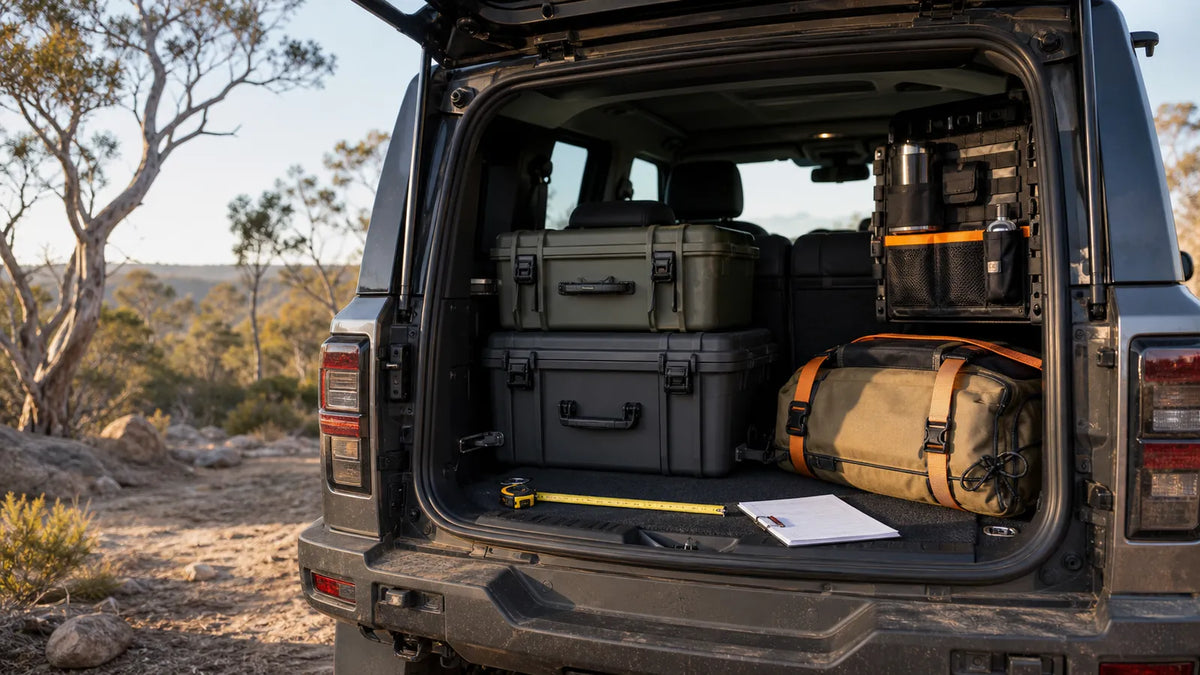
Buying a bull bar for a GWM Tank 300 starts with a simple rule: confirm the complete vehicle and build, not just the model name. Petrol and hybrid vehicles may be covered by the same product listing, but cameras, parking sensors, lighting, washer-bottle layout, mounting points and the accessories you plan to add can change the installation.
This checklist helps Australian Tank 300 owners gather the details an installer or seller needs before an order is placed. If you are still comparing complete bars with light mounts and other front-bar accessories, start with our GWM Tank 300 bull bar buying guide.
Quick answer: what must be checked before buying a Tank 300 bull bar?
Before ordering, confirm these nine items:
- Petrol or hybrid powertrain, model year and trim.
- The exact bumper and front-end configuration.
- Parking sensors, forward camera and driver-assistance equipment.
- Whether the listing is a complete bull bar or only an accessory.
- Material, listed bar weight and total installed front-end weight.
- Winch, recovery, lighting and antenna plans.
- Cooling airflow, washer-bottle and number-plate clearances.
- State or territory road-use requirements.
- The installer, delivery address and post-installation checks.
Do not rely on a product title, a vehicle photo or the phrase “Australian-style” as proof that every item above has been verified.

This six-stage summary keeps the vehicle, sensors, mounting, planned accessories, weight and installer checks connected. The article text below provides the full verification detail.
1. Record the powertrain, model year and trim
Begin with the exact vehicle, including:
- petrol or hybrid;
- model year;
- trim or special edition;
- any previous bumper, suspension or underbody changes; and
- the state or territory where the vehicle is registered.
The current Decision Maker 4X4 Tank 300 bull bar listings identify petrol and hybrid applications, but that is a starting point rather than a substitute for a vehicle-specific check. Send clear front, three-quarter and under-bumper photos if there is any uncertainty.
2. Identify the factory bumper and mounting area
A seller or installer needs to understand what is already fitted. Check the bumper profile, existing guards, factory mounting points and any equipment positioned behind the bumper.
This is particularly important on a vehicle that has already been modified. A compatible bar still needs adequate clearance and suitable mounting hardware; it should not be made to fit by cutting or relocating safety-related components without an approved plan.
3. List every sensor, camera and driver-assistance feature
Make a written list of the front parking sensors, forward-facing camera and any driver-assistance hardware on your Tank 300. Ask the installer how the selected bar will affect:
- sensor position and angle;
- camera visibility;
- wiring routes and connectors;
- warning lights or calibration requirements; and
- the visibility of the number plate and lamps.
A product with “sensor provisions” still needs to be matched to the vehicle. Provision for a component does not guarantee correct placement or operation after installation.
4. Confirm whether the listing contains a complete bar
Tank 300 search results can mix complete bull bars with light frames, spotlight packages, hooks and other accessories. Read the variant name before checkout.
For example, the NR bull bar, light mount and spotlight listing contains several separately selected options. Some variants are bars, while others are spotlight pairs or a single hook. The selected variant—not the main product image—defines what is being purchased.
Ask these questions:
- Is the main structural bar included?
- Are mounting brackets and fasteners included?
- Are lights, hooks or guards included or optional?
- Does the item require another compatible bumper or bar?
- Is the selected hook or mount documented as load-rated?
Never treat a decorative hook, light mount or convenient mounting hole as a rated recovery point unless the product documentation and installer specifically confirm its rating and intended use.
5. Compare material and total installed weight
Compare the supplier-listed material and weight, then calculate the complete installed setup—not the bare bar alone.
Two current examples show why this matters:
| Current listing | Supplier-listed construction | Supplier-listed bar weight | Important scope check |
|---|---|---|---|
| TENGQIAN Bullbar Front Bumper | 5052 aluminium alloy | Approx. 40 kg | Confirm lighting, sensor, camera and washer-bottle arrangement |
| SUREE T750L Australian-Style Bull Bar | T750L special steel | Approx. 36.8 kg for the bull bar | Choose bull bar, fender guardrail or combined variant carefully |
These are supplier-listed figures for the products as described, not independently measured installed weights. Add the mass of the winch, lights, guards, brackets and other accessories. Ask the installer to check the vehicle's gross vehicle mass, front-axle limit, suspension condition and headlight aim with the completed build.

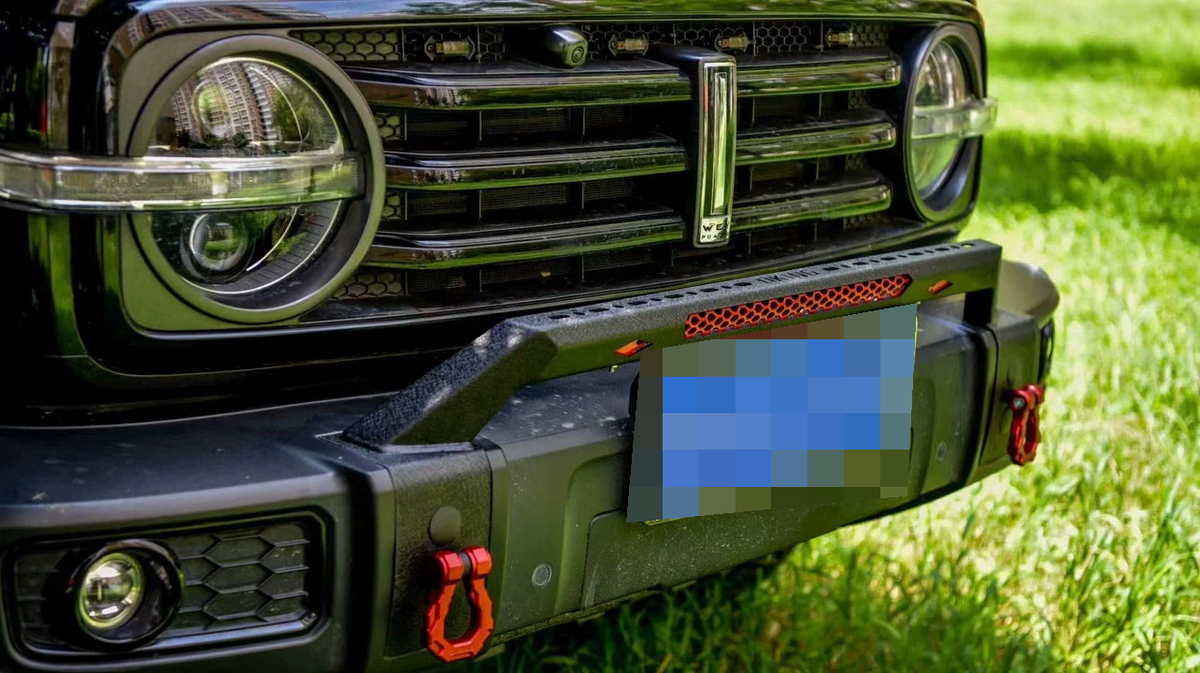
TENGQIAN complete front-bumper product image. Confirm the installed configuration against your vehicle before ordering.
6. Plan the winch, recovery equipment, lights and antennas together
A bar should be assessed as part of the whole front-end system. Tell the installer about every planned accessory before purchasing the bar.
For a winch, confirm the mounting structure, capacity, access to the clutch, fairlead position, cable routing and service access. For driving lights or daytime running lights, confirm the mounting position, wiring, switching and road-use requirements. For antennas, check placement and pedestrian-safe edges.
The SUREE T750L listing describes a winch-installation structure and reserved accessory positions. These provisions still require a compatible winch and a professional installation plan.
7. Check cooling, washer-bottle and number-plate clearance
Front-end accessories must not be planned in isolation. Ask the installer to check:
- radiator and condenser airflow;
- access to service points;
- washer-bottle position and protection;
- fog-light and daytime-running-light placement;
- front-camera field of view;
- number-plate visibility; and
- sharp edges or projections from brackets and accessories.
These checks should be repeated after the winch, lights, antenna mounts and guards have been added. A bar that is acceptable by itself can become problematic when an accessory projects beyond it.

Concept illustration only: it shows the areas an installer should inspect, not confirmed dimensions or fitment for a specific Tank 300.
8. Verify the rules that apply where the vehicle is registered
Road-use and modification requirements are not established by a product name. The Australian Government publishes the National Code of Practice for Light Vehicle Construction and Modification (VSB 14), while state and territory authorities administer registration and may publish additional guidance.
For example, NSW Government guidance says bull bars and related frontal protection systems must not have protrusions, sharp edges or pointed corners, and accessories must not interfere with the driver's field of view. It also directs owners to check lighting requirements and consult a licensed certifier if they are unsure. Read the current NSW guidance for fitting vehicle accessories and your own registration authority's rules before purchasing.
This article is a pre-purchase checklist, not a compliance certificate. “Australian-style” describes a product style; it does not, by itself, establish ADR or state approval for a particular vehicle and installation.
9. Arrange the installer, freight and post-installation checks
Bull bars are bulky, and the delivery process may require address and access confirmation. Before ordering, confirm:
- whether the selected item is a complete bar or an accessory;
- the delivery address and unloading access;
- who will inspect the package before installation;
- who will install and wire the equipment; and
- which tests will be completed before the vehicle returns to the road.
After installation, the installer should check fastener torque, clearances, sensor and camera operation, warning lights, lighting, number-plate visibility, cooling airflow and any alignment or suspension concerns. Keep the product documentation and installation record with the vehicle.
Fitment enquiry template
Copy this list into a message when asking us to check a product:
Vehicle: GWM Tank 300 Powertrain: Petrol / Hybrid Model year and trim: Registration state or territory: Front sensors and camera: Existing front-end modifications: Planned winch, lights and antennas: Product and selected variant: Delivery postcode: Front and under-bumper photos attached: Yes / No
You can contact Decision Maker 4X4 with these details or compare the current options in the Tank 300 bull bar collection.
Frequently asked questions
Will the same Tank 300 bull bar fit petrol and hybrid models?
Some current listings identify both petrol and hybrid applications, but fitment still depends on the exact model year, trim, sensors, camera, bumper configuration and selected product variant. Confirm those details before ordering.
Does “Australian-style” mean a bull bar is ADR approved?
No. A style description is not proof of approval for a particular vehicle. Check the product documentation, installation, current Australian Design Rules and the requirements of the state or territory where the vehicle is registered.
Can I use a bull bar hook as a recovery point?
Only if the documentation and installer confirm that the component is rated and intended for that recovery use. Do not infer a recovery rating from its colour, shape or mounting position.
Should a Tank 300 bull bar be professionally installed?
Yes. Professional installation is recommended because the job can involve structural mounting, sensors, camera visibility, lighting, wiring, cooling airflow, weight distribution and road-use requirements.
What information should I send for a fitment check?
Send the powertrain, model year, trim, registration state or territory, clear front-end photos, a list of sensors and cameras, planned accessories, the product link and the exact variant you intend to buy.
Product details and government guidance checked on 20 August 2026. Product specifications and regulatory guidance can change; verify the current listing and your registration authority's requirements before ordering or installation.