The first independent Australian drives of the 3.0-litre turbo-diesel GWM TANK 500 are more useful than another specification-sheet comparison. Both WhichCar's 24 September test and CarExpert's newly published review describe a stronger-feeling engine and notably improved ride and handling. They are less aligned on the nine-speed automatic transmission, and both identify usability details a buyer should test in person.
This is our reading of those two journalists' reports, not a Decision Maker 4X4 road test. The reviewers drove vehicles in media-drive conditions. Their impressions do not establish long-term reliability, loaded towing performance or the fit of an aftermarket accessory on a particular owner's car.
Sources checked: 25 September 2026. The hero image is a generic AI editorial concept, not an official TANK 500 photograph or a depiction of either reviewer's drive. The three inline images are original editorial explainers.
Why this is a different story from the launch announcement
GWM's August Australian announcement introduced a 3.0-litre four-cylinder turbo-diesel rated at 170 kW and 620 Nm for the TANK 500 and Cannon Alpha. It lists a 3,500 kg braked towing capacity and a 7.1 L/100 km combined-consumption claim for the TANK 500. These are manufacturer specifications and claims, not results from our testing.
The new reporting adds something the launch release cannot: how the vehicle felt to people driving it. Rob Margeit at WhichCar and Ben Zachariah at CarExpert each discuss on-road and off-road use, cabin usability and the effect of GWM's Australian tuning. It is valuable evidence, but a short first drive is still only one stage in assessing a vehicle that may be used for commuting, family trips and towing.

Where the first drives agree
Engine response is the clearest shared positive. WhichCar describes the new diesel as muscular yet refined. CarExpert also finds the low- and mid-range response a welcome change, while noting that it does not feel as flexible as the Ford Everest V6 higher in the rev range. Those are driving impressions, not a controlled acceleration comparison between identically loaded vehicles. WhichCar; CarExpert.
The Australian ride tune receives unusually consistent praise. WhichCar highlights the balance between road refinement and its off-road launch route. CarExpert says the SUV feels more settled through corners and more composed on rougher tracks than the writer remembered from an earlier drive. Both accounts give prospective owners a reason to include broken suburban roads and a sustained highway section in their own test route, rather than judging comfort only on a smooth loop around a dealer.
Neither report is a substitute for checking cabin controls. WhichCar dislikes the reliance on the touchscreen for some functions. CarExpert also flags ergonomics, including the driving position, and says some steering and brake sensations still lag the best in class. A test drive should include the ordinary operations that will matter every day, not only an enthusiastic throttle run.
One important disagreement: the nine-speed automatic
This is where a neat “reviewers agree” headline would mislead. WhichCar found the nine-speed automatic unobtrusive and responsive when overtaking. CarExpert found that it sometimes held a gear too long and delivered occasional rough shifts, especially around lower-speed driving. WhichCar's gearbox assessment; CarExpert's gearbox assessment.
Different routes, driving styles, vehicles and expectations can yield different impressions. The sensible response is not to decide one journalist must be wrong. In your own drive, include stop-start traffic, gentle acceleration, a safe overtaking opportunity where legal, and low-speed manoeuvring. Notice whether the transmission behaviour suits you. Do not attempt difficult off-road terrain without the right permissions, experience and recovery plan.

What the reviews do not settle
A 3,500 kg braked towing rating is not permission to attach any trailer of that mass to any loaded vehicle. Buyers must check the actual vehicle and trailer combination, including payload, towball download and the manufacturer's mass limits. Neither of these first drives should be read as a controlled towing test for a specific family-and-trailer setup. Confirm the current Australian owner's documentation and seek specialist advice for a heavy caravan.
The 7.1 L/100 km figure is GWM's combined-cycle claim, not an individual trip guarantee. WhichCar describes different fuel readings between off-road work and the road leg of its launch drive; that contrast is a useful reminder that speed, terrain, vehicle load and route change consumption. It cannot be turned into a reliable annual running-cost forecast for your household. WhichCar's drive report.
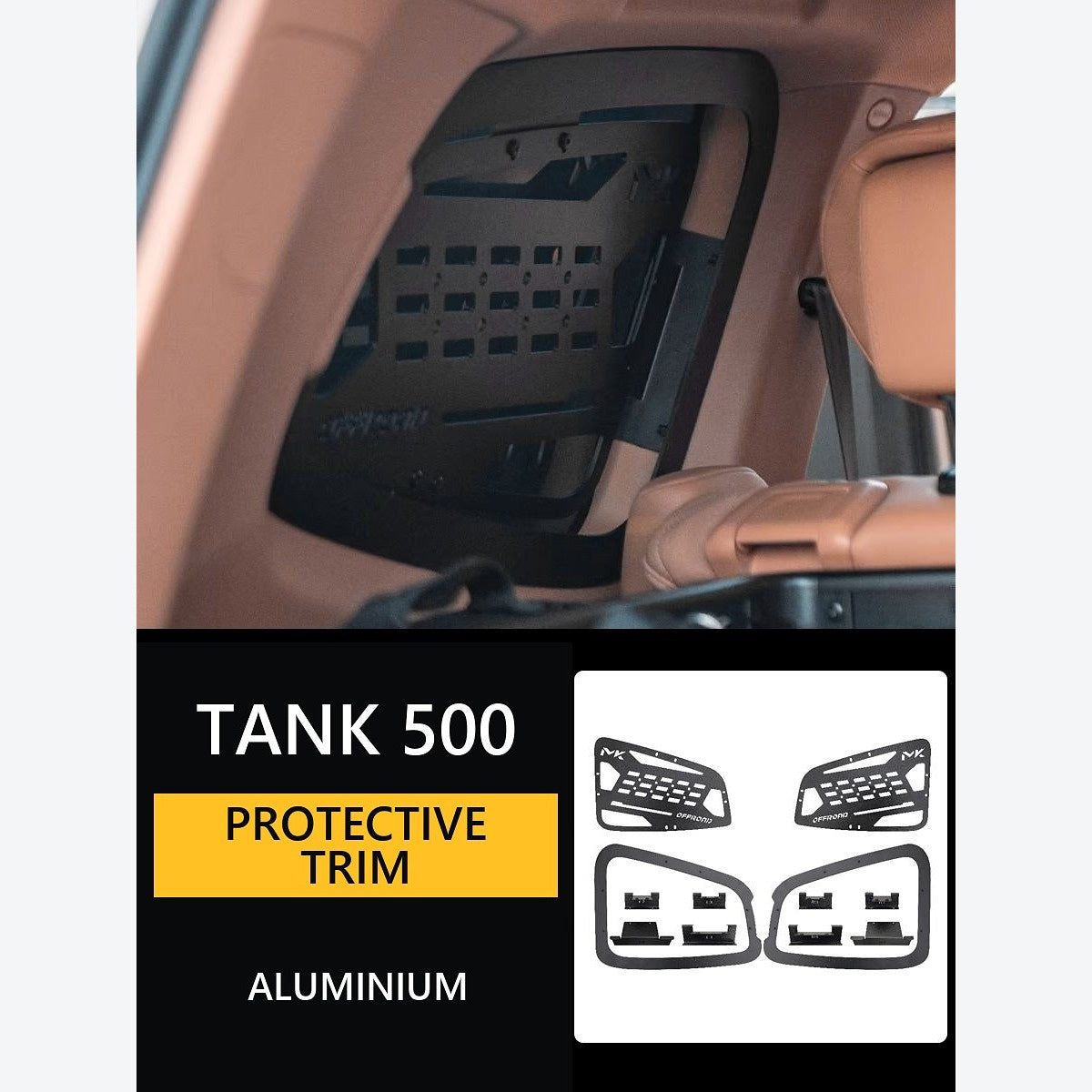
These reports also cannot certify accessory compatibility. A cargo panel, underbody part or other fitting should be checked against the exact Australian build, grade and mounting points. Our TANK 500 diesel accessory fitment guide covers those questions separately from the vehicle review.
A practical owner test drive
Book enough time to evaluate the specific grade you would buy, ideally on a route with the surfaces you use. A short, repeatable plan is more informative than trying to recreate a media launch route:
- Cabin and cargo: sit in the rows you will use, fold seats, and check whether your real equipment fits. Do not infer space from a wide-angle photograph.
- Mixed road surfaces: drive an ordinary rough street and a longer steady-speed section, where permitted, and listen for cabin noise and changes in ride quality.
- Controls: locate climate, camera and drive-mode functions while parked first. During the drive, note whether routinely used controls demand too much attention.
- Driveline: watch for low-speed shift behaviour, braking feel and steering response in normal traffic. If towing matters, ask for a properly arranged, representative demonstration rather than assuming an empty-vehicle drive answers that question.
- Written details: before a deposit, get the grade, build specification, delivery status and relevant towing or warranty documentation in writing.

The takeaway
The newly published reviews give the diesel TANK 500 a credible early case on engine response and ride quality, while raising enough gearbox and ergonomic questions to make a personal drive worthwhile. That is more actionable than either unqualified praise or a specification-sheet verdict. Read WhichCar and CarExpert in full, check GWM's current Australian model information, then evaluate the exact vehicle and job you have in mind.