
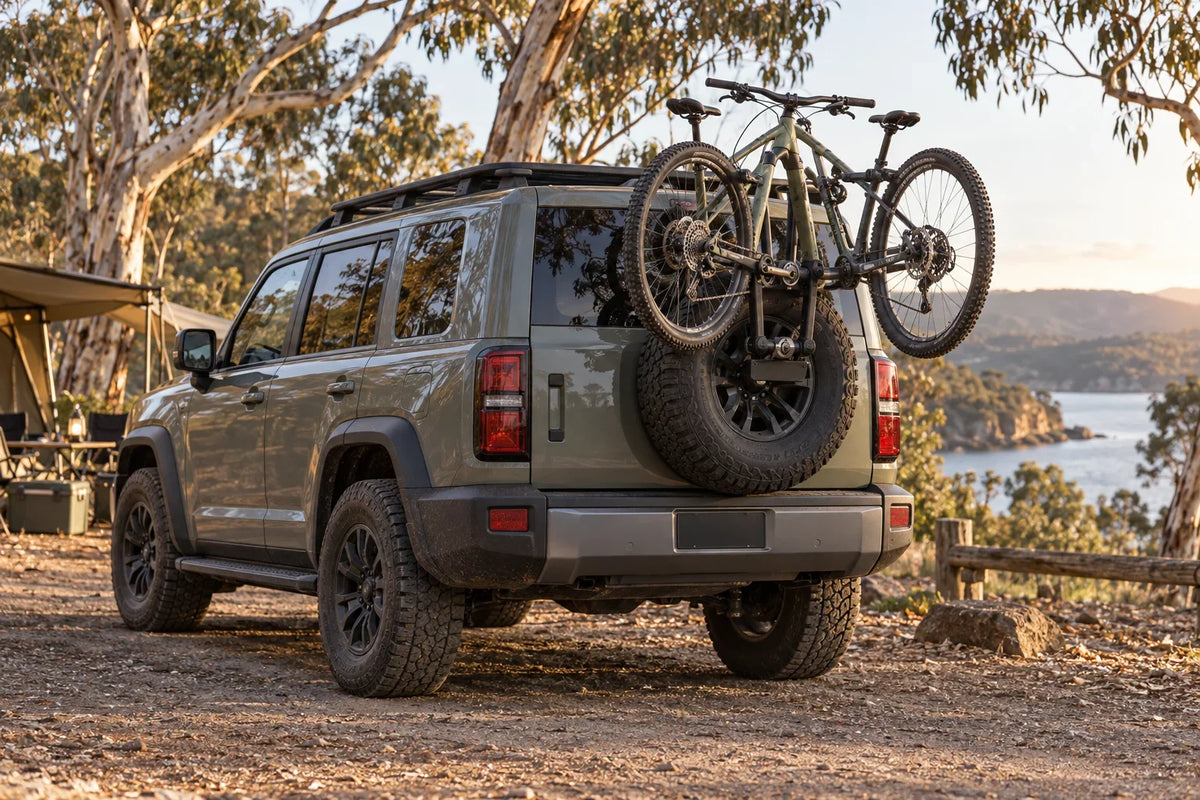
“Carries two bicycles” is not the same as a verified load rating for two of your bicycles. The spare-wheel-mount carrier listing for TANK 300, 400 and 500 currently offers Aluminium Alloy / Silver and Metal / Matte Black as its two selectable versions. It describes a folding structure, rear-spare-wheel location and capacity for up to two bikes. It does not state a maximum combined bike mass, the empty carrier mass, exact spare-wheel attachment method, permitted tyre sizes or vehicle-year fitment in the short description. Those omissions matter more than the finish when choosing a rear-mounted rack.
Listing checked 11 October 2026. We have not installed or load-tested either version. The cover is a generic AI concept, not the listed product or a specific GWM fitment; the three additional images are original editorial explainers.
What are the two menu choices?
| Current selector label | What it identifies | What it does not establish |
|---|---|---|
| Aluminium Alloy / Silver | A silver, aluminium-alloy source configuration | Total carrier weight, load rating or lighter installed mass than the black version |
| Metal / Matte Black | A matte-black metal source configuration | Exact metal grade, rust treatment, load rating or higher strength |
| Both versions | A product presented as fitting the rear spare-wheel area of TANK 300/400/500 and carrying up to two bicycles | That every wheel, wheel cover, rear camera, tailgate or bike frame fits without modification |
The listing gallery is helpful for understanding the intended arrangement, and its description says rear-camera clearance is demonstrated there. But a gallery photo of a carrier cannot prove that the camera view remains unobstructed with two particular bikes mounted. Nor can “metal” versus “aluminium alloy” tell you which option is lighter, stronger or more suitable without a manufacturer specification. Ask for the actual empty mass and rated bicycle mass of each selectable SKU, plus a packing list covering cradles, straps, locks, wheel supports and mounting hardware.

Will it fit my spare wheel and rear door?
A vehicle-family heading is not a measured fitment sheet. Give the seller your Australian model, build year, trim, powertrain and VIN, plus the fitted spare tyre size, wheel offset and any aftermarket spare-wheel cover or rear-door accessory. Ask whether the rack fixes to the wheel, wheel-mount bolts, carrier bracket or another interface; those are different load paths. Request the manufacturer's installation drawing, approved wheel-size range, required clearances and a written fit statement for your exact vehicle. A photograph of one TANK 300 cannot prove a TANK 500 installation, and the appearance of TANK 400 in the catalogue is not evidence of an Australian TANK 400 specification.
Check the rear door through its full swing with the rack both folded and carrying the intended bikes. Confirm that hinges, latch, door stay, bumper, rear wiper, spare-wheel cover and tailgate seals still work as intended. The centre of mass sits behind the vehicle when bicycles are loaded; do not assume the factory spare-wheel mount or door hinges are rated for extra rack-and-bike weight. Ask the vehicle manufacturer or a qualified fitter about any relevant rear-door, spare-wheel and accessory limits. If the supplier cannot provide a meaningful rating or mounting method, pause the order rather than treating the “two-bike” phrase as a safety certification.
Our TANK 300 spare-wheel-cover guide shows why cover shape and tyre size already vary between rear-mounted accessories. Adding a bike carrier makes the clearance problem more demanding.
Which bicycles can it carry?
Start with the actual bikes, not their count. Weigh each ready-to-ride bicycle including battery, locks, bags and bottle cages that will remain on it. Check wheelbase, frame tube shape, tyre width, handlebar height and how the carrier supports each bike. E-bikes can be much heavier than conventional cycles; do not assume either SKU is suitable for them without an explicit manufacturer approval and load rating. If removable batteries are taken off for transport, still follow the bike and battery makers' instructions and count everything that remains on the rack.
Confirm how the bicycles are restrained against bouncing, rotating into the spare tyre, contacting one another or obstructing the rear door. Ask whether a second strap is required by the carrier instructions, whether the rack can lock in the folded position, and how the hardware is checked after rough-road use. Do not improvise new holes or extended brackets to make an incompatible bike fit. The catalogue calls the structure folding, but does not publish its folded projection or clearance to the rear door; request those dimensions.

What about number plate, lights and camera visibility?
Test the complete loaded setup, not an empty folded rack. An outer bicycle wheel, frame or pedal can change what following traffic sees. In New South Wales, the government says an auxiliary plate is needed when a bike rack covers the rear number plate. Queensland's bicycle-transport guidance similarly requires visibility of the plate and rear lights, with an official accessory plate and additional lights where applicable. Requirements vary by state and the actual loaded configuration; verify the current rules where your vehicle is registered and driven before using it on public roads.
Check brake, tail, indicator and centre high-mounted brake lights from behind; check that the number plate and its illumination remain compliant; and confirm no bicycle projects dangerously beyond the vehicle. Never substitute a hand-made plate for an official one where an auxiliary plate is required. The carrier description notes gallery-demonstrated camera clearance, but the camera needs to be checked again with both bikes in place. A clear camera view is useful; it does not replace physical visibility or legal lighting and plate requirements. If the rack or bikes hide safety equipment, solve that before road use.

The practical buying answer
Treat the two live carrier options as finish and material choices, not proven differences in load capacity. Before selecting either, obtain a written load rating, empty rack mass, model-and-wheel fit chart, exact fixing method, supplied hardware list and bike-shape compatibility. Have a competent fitter assess the rear door and spare mount with your actual bicycle weights. Then check the completed load for camera, number plate, lighting and protrusion rules in your state. If a key rating remains unavailable, consider a carrier with documented capacity rather than guessing.
Frequently asked questions
Does the listing prove it can carry two e-bikes?
No. It says “up to two bicycles” but does not publish a load rating or e-bike approval in the short description. Ask for both before planning to carry heavy bikes.
Is the silver option necessarily lighter than the black option?
Not established. The options identify materials/finishes, not measured mass or strength. Request the specifications for both SKUs.
Does a product photo prove the rear camera will work with two bikes?
No. The gallery may show clearance with a particular arrangement. Test the camera with the actual two bicycles loaded, and separately check road-legal plate and light visibility.


